
From connectivity woes to infrastructure advancements and the startup boom, there is a gulf between claims and reality in India's economic landscape, points out Devangshu Datta.
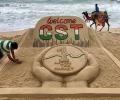
India's Goods and Services Tax (GST) collection surged to Rs 1.30 lakh crore in October, the second highest since its implementation in July 2017, indicating economic recovery from the COVID-19 pandemic and impact of festive demand, a finance ministry statement said on Monday. The highest GST collection of Rs 1.41 lakh crore was recorded in April 2021. This is the fourth time in a row when the GST collection was upwards of Rs 1 lakh crore. The collection from GST was Rs 1.17 lakh crore in September, 2021.
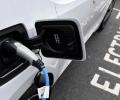
Proliferation of home chargers of around 7 KWh and above, which take six to seven hours to fully charge a car depending on the model, bring running costs down by a third or so. That, coupled with the increasing range of modern electric cars, can lead to a massive increase in sales.

The list of exempted goods from central excise duty has shrunk from 400 items in 2011-12 to 300 now.

The one national GST unifies the country's $2 trillion economy and 1.3 billion people into a common market, an exercise that took 17 tumultuous years.

Provisions in the bill, titled Karnataka Public Examination (Measures for Prevention of Corruption and Unfair Means in Recruitment) Bill, 2023, also include confiscation of property.
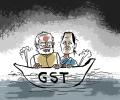
CAG recommended fixing a definite time frame for rolling out simplified GST return forms.

'Sin tax' is a globally prevalent practice under which products like alcohol and tobacco attract higher rates of tax.

Infosys chief Kris Gopalakrishnan on Wednesday expressed hope that DTC and GST will be pushed through in the forthcoming budget, while Genpact vice chairman Pramod Bhasin feared economic reforms will be tough going forward.
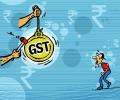
Over 100,000 small and medium-sized businesses are non-compliant with e-invoicing norms under the goods and services tax (GST) regime, a mandatory requirement for businesses with an annual turnover of over Rs 5 crore. E-invoicing provides real-time access to invoices that are prepared by the supplier on the purchase of goods, allowing faster accessibility to input tax credit, thereby limiting the manipulation of fake credit as it has to be generated before the transaction. "The default has been reported mainly in businesses with a turnover between Rs 5 crore and Rs 20 crore," a senior official informed

GST authorities have issued show cause notices worth Rs 1 lakh crore to online gaming companies for tax evasion so far, a senior official said on Wednesday. The official, however, said there is no data yet of foreign gaming companies registering in India since October 1. The government has amended the GST law, making it mandatory for overseas online gaming companies to register in India from October 1.

'While collections under the Income Disclosure Scheme explain it partly, indirect tax numbers not showing any effect of the withdrawal of high denomination currency notes was puzzling.'

Leaving direct taxes untouched, Finance Minister P Chidambaram today slashed excise duty on cars, SUVs and two-wheelers, and capital goods and consumer durables to boost manufacturing and growth.

Insurance companies may soon face goods and services tax (GST) audits as tax authorities plan a "deep dive" into their business practices to check for the possibility of a raft of tax-linked irregularities. Several insurance companies are being probed for wrongly availing of the input tax credit without the underlying supply of goods and services based on fake invoices generated by their channel partners and intermediaries. "We want to deep dive into the overall business and see if there are further taxation issues besides commissions, which are already being investigated," a senior official of the Central Board of Indirect Taxes and Customs said.
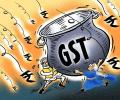
GST collections in September rose 26 per cent to over Rs 1.47 lakh crore, the finance ministry said on Saturday. Goods and Services Tax (GST) mop-up has been over Rs 1.40 lakh crore for seven months in a row.
Unveiling far reaching fiscal reforms to improve tax mop up and wipe out revenue deficit by 2009, the Kelkar panel on Friday proposed a single countrywide goods and services tax, removal of tax exemptions and raising income tax slab to Rs 100,000.

The government on Tuesday announced withdrawal of the 2 per cent equalisation levy or digital tax on overseas e-commerce supplies.
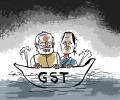
Agra has long been known for the Taj Mahal, but it is also a manufacturing hub filled with micro, small and medium enterprises (MSMEs) that make everything from electronic components to metal products, from paints and chemicals to footwear. And five years after the introduction of the Goods and Services Tax (GST), the MSMEs here complain that while the indirect tax regime has been transformative, cutting out the need to file multiple taxes, its biggest drawback has been the delay in credit refunds. Whoever you speak to - MSME owners, tax lawyers, or industry bodies like the National Chambers of Industries and Commerce (NCIC), Agra Footwear Manufacturers and Exporters Chamber (AFMEC) and Agra Shoe Manufacturers Association (ASMA) - they all emphasise that the GST continues to face some key challenges.

Corporation tax is the single largest source of income, contributing 21 paise to each rupee earned.
A decision in this regard will be taken by the empowered committee of state finance ministers in its meeting on December 20.
Besides central cess, the Empowered Committee of State Finance Ministers has also recommended to keep purchase tax and octroi, which are collected at state and local levels, outside the GST framework.
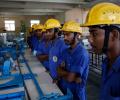
Unincorporated enterprises in the manufacturing sector lost nearly 1.8 million establishments and shed 5.4 million jobs between July 2015-June 2016 and October 2022-September 2023, an analysis of the fact sheet on 'Annual Survey of Unincorporated Sector Enterprises (ASUSE)' and the comparable 73rd round survey in 2015-16 by the National Statistical Office (NSO) showed. An estimated 17.82 million unincorporated enterprises operated in the manufacturing sector in October 2022-September 2023, nearly 9.3 per cent down from 19.7 million unincorporated enterprises in July 2015- June 2016.

It will be the second Budget of the Modi 3.0 government and eighth straight Budget for Nirmala Sitharaman, rare in Indian polity.

Recent documents by NITI Aayog and periodic labour force surveys on employment show that the importance of agriculture is rising in the Indian economy.

Isn't there something significant in the UPI example for all of us to learn from and execute to enable world-scale success for our startups?, asks Ajit Balakrishnan.

The government hopes to implement direct tax code from April 2011.

The Central Sales Tax is imposed by the Centre but revenue goes to the states.

Jaitley says govt is open to scrapping 1% additional tax on GST

The rising goods and services tax (GST) and personal income-tax collections may bolster the Narendra Modi government's ability to announce new schemes or enhance existing ones.

The US Trade Representative noted that India's average applied tariff rate stood at 17% per cent, the highest of any major world economy.

After adding 11.7 million workers in the October 2022-September 2023 period from the pandemic lows in April 2021-March 2022, total workers employed in the vast informal sector in India - at 109.6 million - still remains below the pre-pandemic period.

Brokerages expect a further slowdown in Indian firms' revenue and earnings growth in Q4FY25, following low single-digit growth in the preceding three quarters, as factors like weak consumer demand and credit growth linger on.

Among parties, the NCP stood out with five of its MPs raising an average of 410 questions each. On the other hand, two Apna Dal (Soneylal) raised only five questions each on average.
Government introduced two Bills in Lok Sabha on Friday -- one seeking to phase out central sales tax in four stages and eventually abolish it in three years and another to give more operational flexibility to the Reserve Bank of India.

The GST Council, headed by Jaitley and comprising representatives of all the states, is scheduled to meet in Srinagar on May 18-19 to finalise tax rates on different goods and services after unifying at least 10 indirect taxes into the Goods and Services Tax.

If you think that revenue officials are going berserk, acting on their own, while the government chants the mantra of 'ease of doing business', you would be wrong. These moves appear to have full official backing, points out Debashis Basu.

Hospitality and travel sector players on Tuesday demanded infrastructure status for the hotel industry besides measures such as tax exemption on LTA annually to boost domestic tourism ahead of the Union Budget. They also recommended removal of the current TDS levied on automated bookings for internal or closed user groups such as business travel platforms and reducing the total number of licenses required to establish a hotel. "A full-blown infrastructure status for the hotel sector and further rationalisation of the Goods and Services Tax (GST) and a Central single window clearance for hotel projects are some of the major expectations from the Budget 2024," Roseate Hotels & Resorts CEO Kush Kapoor said in a statement.
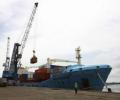
Stock to watch: Shipping Corporation and Great Eastern Shipping

"Reaching an international agreement on how large digital companies are taxed has been a priority for the chancellor since he took office," said a spokesperson for his UK treasury office. "The chancellor's consistent position has been that it matters where tax is paid, and any agreement must ensure digital businesses pay tax in the UK that reflects their economic activities. That is what our taxpayers would expect and is the right thing," the spokesperson said.

India is trying to push a national goods and services tax (GST) through parliament that would replace a myriad of state sales taxes and shake-up government revenue.
